

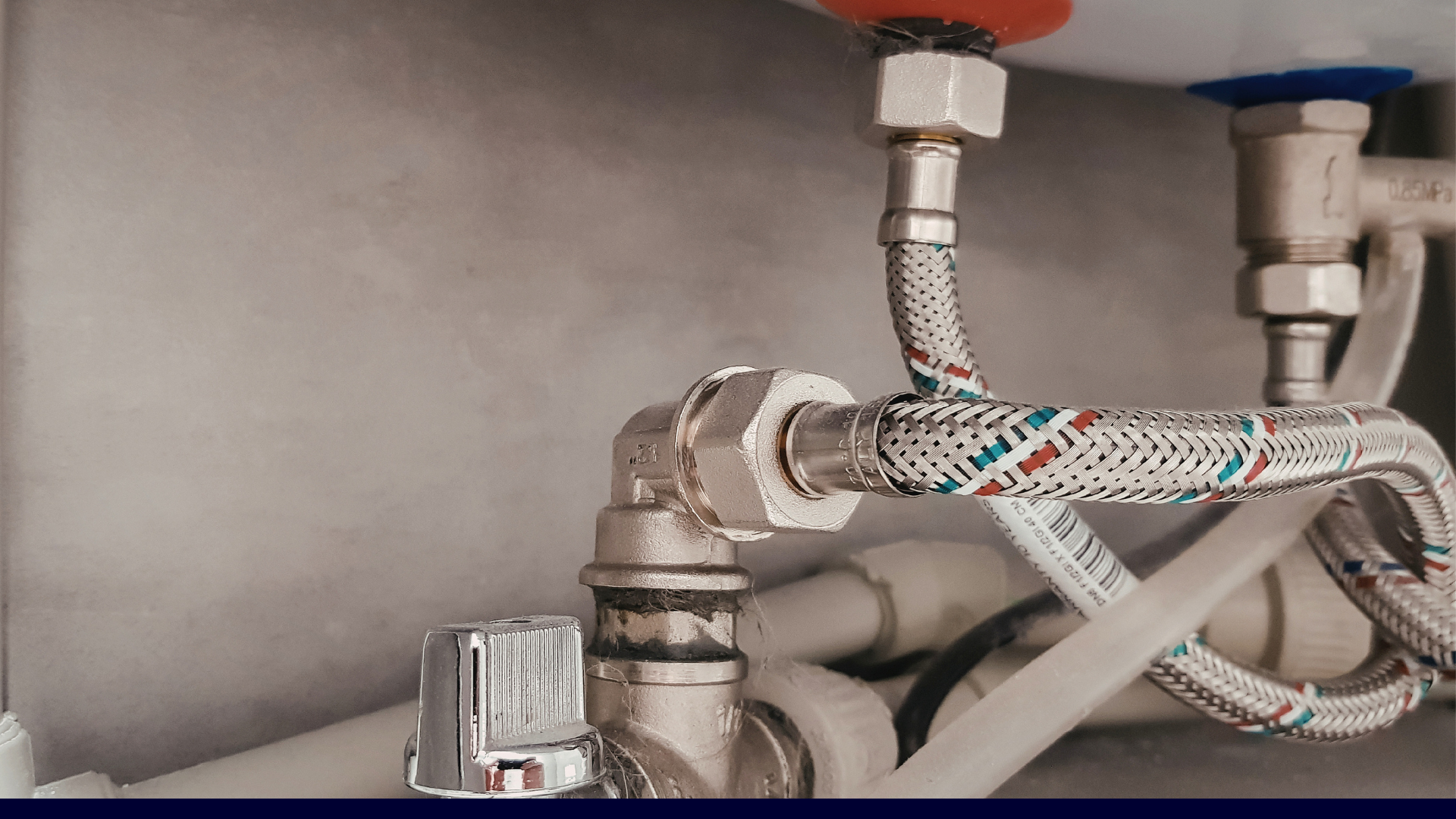
Flexi hoses may be small and easy to overlook, but they have the potential to cause significant damage to your own lot, neighbouring properties and common property. Across strata communities, ageing or damaged flexi hoses, on‑site hot water units and taps left pressurised while owners are away, remain some of the most common causes of water damage and insurance claims.
Understanding the risks and taking simple preventative steps can help protect your home and support the wellbeing of everyone in your building.
What is a flexi hose?
A flexible hose, also known as a flexi hose, is a short, bendable pipe made of rubber and reinforced with braided stainless steel. These hoses connect water to everyday fixtures like taps, toilets and household appliances. Because they are constantly under pressure, regular inspection and timely replacement are essential to reducing risks of leaks or sudden failure.
Common causes for failure
Flexible hoses most commonly fail due to:
- Ageing
- Incorrect installation
- Corrosion
- Being left under constant water pressure
Without routine inspection, hoses can weaken, fittings can deteriorate and small defects can go unnoticed until a sudden failure occurs. Heat, vibration and everyday use also contribute to wear and tear.
In Australia, insurers and plumbers consistently identify burst flexi hoses as a leading cause of sudden water leaks and costly damage. When a hose fails, it often does so without warning and can release a large volume of water in a very short time.
Preventative maintenance
Regular inspections and replacements by professionals
Flexi hoses should always be inspected and replaced by a licensed plumber to ensure correct installation and appropriate pressure and temperature ratings, with replacement recommended every five years. Regular professional inspections can also help identify ageing hoses and on‑site hot water connections before they fail, reducing the risk of unexpected water damage to your home, neighbouring lots or common property.
Turning off the water at the source
One of the simplest preventative steps you can take is to turn off taps under sinks, basins and washing machines before going away. If a flexi hose fails while the tap is pressurised, water can run continuously for hours or even days. Turning the water off at the source is a quick habit that offers significant peace of mind when you are away from home.
Education on the risks
Awareness is the first step in prevention. Knowing whether you have flexi hoses and understanding the risks helps you take proactive action. Simple steps such as talking with your neighbours about flexi hose risks, raising the topic at annual general meetings, and setting regular inspection or replacement reminders can significantly reduce the likelihood of unexpected and expensive water damage.
Experiencing an emergency?
If you are facing an urgent situation, remember that all Bright & Duggan managed buildings have access to our fully staffed fully staffed 24/7 Emergency Response Service, designed to provide peace of mind when urgent situations arise, no matter the time of day or night.
For more information, you can visit the Strata Community Association (SCA) website below, where you can find state-specific guidance for NSW and QLD, as well as general resources on compliance, disputes, and strata management.